

Why We Exist
Healthy Food is a Right
Everyone needs healthy food access to do their best in school and in life, and it is especially critical that children receive the high-quality nutrition that their growing bodies need.
However, the ending of supplemental relief measures combined with grocery inflation and the increased cost of living has made good food out of reach for many of our neighbors.
Now more than ever, it is important to provide consistent access to the food that everyone deserves.
Understanding
Complexity
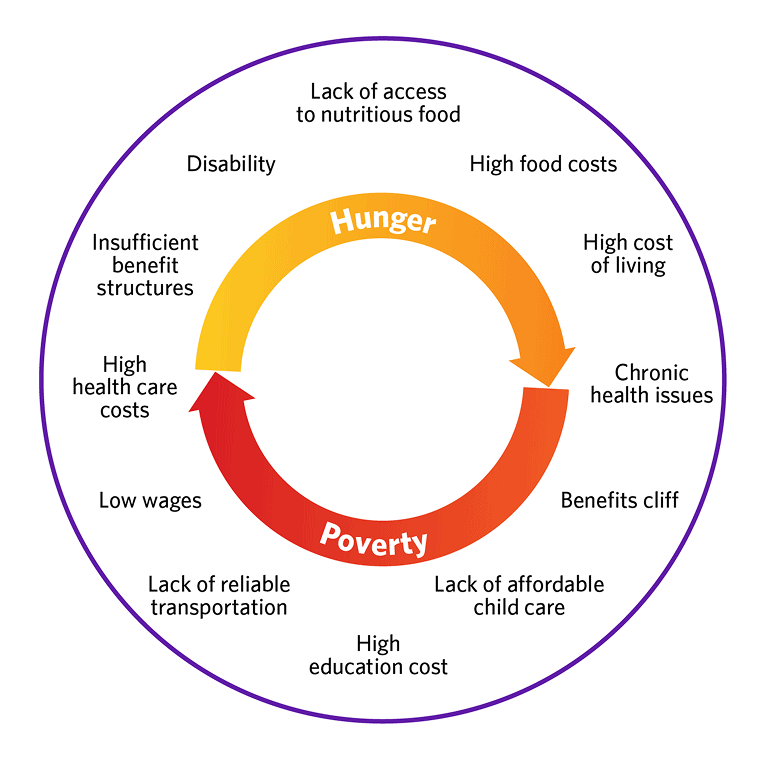
Hunger is both a symptom and a cause of poverty, meaning that hunger reinforces poverty and poverty reinforces hunger.
Food insecurity exists in a complex system in which people are strained in multiple aspects of their time, energy and budget. When looking at the whole system, we see how hunger is a public health issue intertwined with housing, childcare, disability and other circumstances that exist beyond individual control.
When stress is removed from pieces of this system, its reinforcement weakens, giving an opportunity to exit this loop for a brighter future.
What Hunger Looks Like in Michigan

1 in 6
people face hunger

1 in 5
children face hunger

1,544,250
people are facing hunger
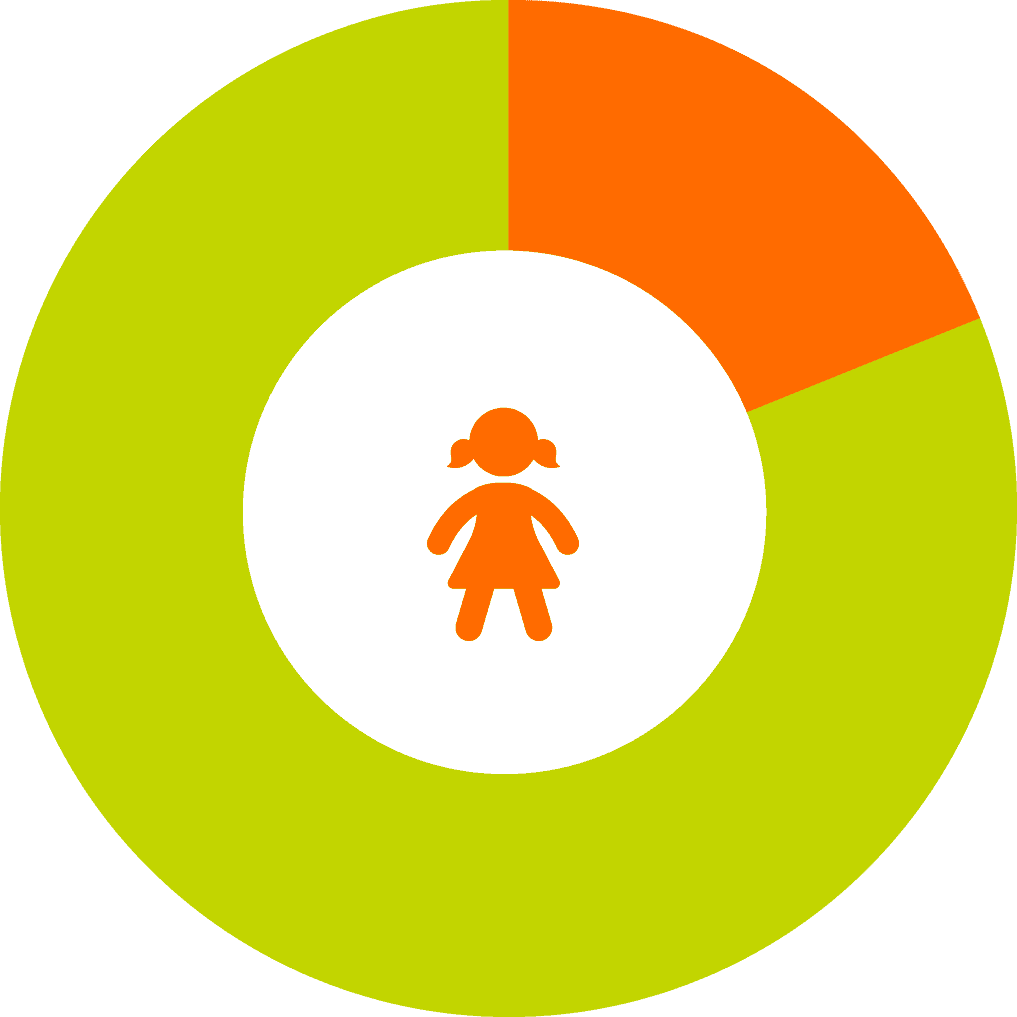
402,680
children are facing hunger
FAQs
What is Food Insecurity?
Food insecurity is more than just not having enough food to eat. It is also the lack of access to the food needed to maintain good health. According to the US Department of Agriculture, this can mean reduced quality, variety or desirability of diet (low food insecurity) or the disruption of eating and reduced food intake (high food insecurity).
Who is affected by Food Insecurity?
Many people experiencing food insecurity are what the United Way refers to as “Asset Limited, Income Constrained, Employed (ALICE)” families. These are neighbors who are working full time, often in jobs that are a service to the community, but whose income is still not enough to make ends meet. Often, eliminating healthy whole food, which is more expensive, is one of the first difficult choices these families make.
What does hunger look like in West Michigan?
More than 153,000 people in Kent, Muskegon, Ottawa and Allegan counties experience food insecurity. More than 41,000 of them are children, representing 14.4 % of the child population. (Source: 2023 Kids Count data from The Annie E. Casey Foundation)
Get Involved
Every day is an opportunity for advocacy. We strive to increase the understanding of how food access impacts health, why it is crucial for communities and what we can do to ensure good food for future generations.
